Bringing home a puppy comes with a long list of firsts, and the first walk around the block is usually the one people look forward to most. It is also the one that tends to go sideways: eight pounds of puppy hitting the end of the leash like a sled dog while you stumble along behind. Loose-leash walking is not a talent puppies are born with. It is a skill, and it gets built in short, boring, repeated sessions.
What follows is a realistic path from your living room to the sidewalk, in the order most puppies can actually handle it.
Start With Gear That Works With You
Pulling often begins with equipment that rewards it. A retractable leash is the classic example: it keeps tension on the line almost all the time, and every step your puppy takes puts distance between you. That teaches pulling, not walking together. Put it aside for training and use a plain four-to-six foot leash you can loop over your wrist and gather easily.
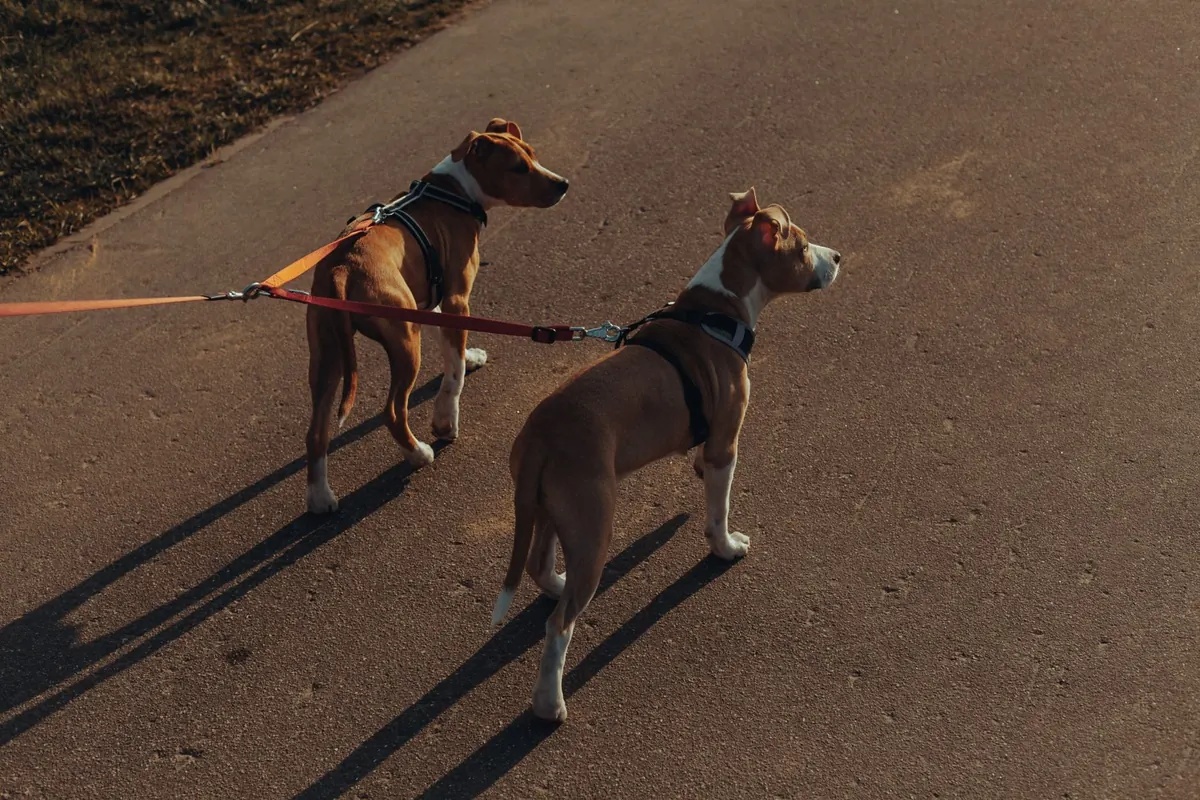
For the harness, a front-clip style is the friendliest choice for a puppy who pulls. When the leash attaches at the chest, a puppy who surges forward gets gently redirected sideways instead of leaning into the pressure. A well-fitted back-clip harness works too, especially for small breeds, but it does give a determined puller more to push against. Whatever you choose, check the fit: you should be able to slide two fingers under every strap, and nothing should rub behind the front legs after a walk.
Skip choke chains, prong collars, and anything marketed as a "correction" tool for a puppy. Young dogs are still learning what the world is, and jerking on the neck teaches them that walks are unpredictable. A flat collar with an ID tag is fine for identification, but attach the leash to the harness.
Small Things That Make Training Easier
- Pea-sized soft treats you can deliver fast without slowing the walk down.
- A treat pouch on your hip, so your hand does not have to dig into a pocket.
- Two leashes if you have a helper, or one six-foot leash with a spare clip.
- A quiet, flat route for early outdoor sessions — the same block, walked often.
Practice Indoors Before the Sidewalk
Clip the leash on in the kitchen and let your puppy drag it around while you make coffee. Ten seconds of that, a treat, done. Repeat a few times a day so the leash stops being a strange, annoying object. Then move to short structured sessions: two to three minutes, three or four times a day, in a hallway or living room with the TV off.
Hold a treat at your left knee and take one step. If your puppy steps with you, say "yes" and hand over the treat. Two steps, then five, then ten down the hallway. Turn and go the other way. That is the entire exercise, and it is enough. Puppies learn faster from many tiny wins than from one long session that ends in frustration.
Reward the Leash You Want to See
The core idea is simple: a slack leash gets paid, a tight leash gets nothing. Most people accidentally do the opposite — they keep walking while the leash is taut and only stop when the puppy plants their feet.
Watch for the moment the leash dips into a soft curve and mark it. That is the behavior you are buying.
- Mark and treat when the leash is loose, even if your puppy is just standing there.
- Feed near your leg, not in front of your face, so the reward happens where you want your puppy to be.
- Reward position first, forward motion second. A puppy walking beside you gets paid more than one charging ahead.
- Change direction before the leash goes tight rather than after.
If you only remember one thing: pay for the slack, and stop for the tension.
When the Leash Goes Tight, Stop Walking
Plants your feet. Stand still, hands quiet at your sides, and wait. You are not yanking backward, scolding, or dragging your puppy into position. You are simply making forward motion stop the instant the leash tightens. Most puppies look back within a few seconds, and the moment they do and the line goes slack, say "yes," reward, and walk on.
If your puppy is truly locked onto something, a gentle turn away often works better than standing still. Say your puppy's name in a happy voice, pivot, and take three or four steps in the other direction, then reward when they catch up. Repeating this a few times per walk teaches a simple lesson: staying near you is where the walking happens.
Keep a slow pace and let your puppy sniff. Sniffing is not failure; it is how dogs read the neighborhood, and a puppy allowed to investigate is often calmer on the leash than one marched past everything.
Add Distractions a Little at a Time
Once your puppy can walk a quiet hallway and an empty sidewalk, start adding the real world — one variable at a time. Distance is your best tool. If another dog appears across the street and your puppy's attention snaps over, that is still workable; you are far enough away that they can notice and then turn back to you. If they cannot turn back, you are too close. Move farther away, get a few good steps with slack, and end the session there.
Work through mild distractions in roughly this order: a parked bicycle, a person walking on the far sidewalk, a barking dog behind a fence, a leaf pile, a busy crosswalk. Each one gets its own short practice session, not a full walk. And keep an eye on your puppy's body language. A stiff, frozen puppy is over their head and needs distance, not more repetitions.
A Note on Ages and Energy
Young puppies tire quickly, and their joints and growth plates are still developing. Short, frequent outings suit them far better than long marches, and a tired, wired puppy pulls more. If you are unsure how much walking is appropriate for your puppy's age or breed, ask your veterinarian for guidance.
Mistakes That Slow You Down
- Training only when you are rushed. Give yourself ten spare minutes or skip the training and just let your puppy sniff.
- One marathon session a week. Four two-minute sessions beat one forty-minute attempt every time.
- Leash jerks. They create confusion and can hurt a growing neck. Stop, wait, and reward the slack instead.
- Inconsistent rules. If one person allows pulling and another does not, your puppy learns to pull and gamble.
Sticking With It
Expect messiness. A four-month-old puppy will still lunge at squirrels, and some walks will feel like a negotiation. Track the small things instead of the whole picture: did the leash stay slack for half a block, did your puppy check in twice without being called, did you finish on a good note. Those are the reps that stack.
Keep sessions short, keep treats in your pocket, and end each walk while your puppy is still succeeding. If pulling is paired with coughing, gagging, or a puppy who panics rather than pulls, stop guessing and get hands-on help from a veterinarian or a certified force-free trainer. A few weeks of patient, consistent practice — rewarded at the right moment — is usually all it takes to turn a walk into the best part of the day.
Photo: Vova Kras / Pexels