Litter boxes get set up once and then quietly ignored for years, which is a shame, because they're the piece of cat equipment that sees the most use. A cat might visit four or five times a day. When something about that box feels wrong — too small, too dirty, too exposed — the cat doesn't complain. It finds the bath mat instead. Getting the setup right takes an hour of thought and very little money. Here are the seven things worth getting right.
1. Match the Box to the Cat, Not the Shelf Space
Pet stores stock boxes that look proportional on a shelf and turn out to be too small for a full-grown cat. Measure your cat from the tip of the nose to the base of the tail, then look for a box at least one and a half times that length. Large cats often do better in a clear plastic storage tote with a doorway cut into one side — the high walls keep litter in, and it usually costs less than a specialty box.
Depth matters too. Three to four inches of litter gives most cats enough to dig and bury. Covered boxes work for some cats and frustrate others; the plastic traps odor and cuts down the usable floor space, so size up if you use one. For kittens, older cats, or any cat who struggles to step over a high side, a shallow pan or a cut-down entry makes the difference between using the box and avoiding it.
2. Pick a Litter Your Cat Would Choose
Unscented, fine-grained clumping litter is the reliable default. It's soft underfoot, easy to dig in, and the clumps make daily scooping quick. Scented litters, crystals, pine pellets, and paper products all work in the right household, but cats form preferences early, and they don't always share ours.
Change one thing at a time. To switch litters, mix the new one into the old over a week or so, increasing the ratio. Never combine a litter change with a box move or a new piece of furniture — you'll have no way of knowing what caused the problem. Rinse and dry the box thoroughly between full changes; leftover moisture turns into a cement-like layer under fresh litter. If you have a very young kitten, ask your vet which litter to use.
3. Placement Is a Room-by-Room Decision
Walk your home and ask where a cat would actually want to go. The box should be easy to reach, quiet, and positioned so the cat can see the room while using it. A cat in a box is in a vulnerable position, and it wants to know what's coming.
- Basement or laundry room: fine if it's dry, warm, and the cat gets there without negotiating stairs it dislikes. Not fine if the furnace kicks on beside it.
- Bathroom: often ideal — small, quiet, easy to clean. Watch for doors that get shut all day.
- Hallway or living room: usually too busy, and too exposed for a shy cat.
- Bedroom closet: popular with cats, but keep the door open and don't stack shoes around the box.
- Multi-story home: one box per floor. A cat that has to run downstairs may decide the upstairs rug is more convenient.
Keep boxes away from food and water bowls, and not directly against a washing machine or a door that slams.
4. Do the Multi-Cat Math
The guideline most behavior folks land on is one box per cat, plus one. Two cats means three boxes; three cats means four. It sounds like overkill until you watch a household where one cat guards the only box in the room.
Placement matters as much as the count. Two boxes side by side in the same corner function as a single box for most cats, especially when one cat is doing the guarding. Spread them out: one upstairs, one downstairs, one in a spare room. In a multi-cat home, spread food, water, and sleeping spots too. Tension over resources tends to show up at the litter box first.
5. Build a Scooping Habit You'll Actually Keep
Scoop at least once a day, twice in a multi-cat home. Cats have sensitive noses, and a box that smells strong to you smells overwhelming to them. Remove clumps and solids, bag them, and top the litter back up to depth.
For clumping litter, a full change every few weeks suits a single cat; more cats means more often. Wash the empty box with warm water and a mild unscented soap, rinse well, and let it dry completely before refilling. Skip ammonia-based cleaners and anything heavily perfumed — ammonia reads as urine to a cat, and strong fragrance can drive one away from the box entirely.
6. Know What to Leave Out
Liners, hoods, deodorizing pads, and automatic boxes each solve a human problem and can create a feline one. Cats dig with their claws; a liner that snags gets avoided. A hood traps odor. Deodorizers add scent to a place the cat wants neutral. An automatic box that cycles while the cat is nearby can frighten a nervous animal.
None of that makes these products useless. It means introduce changes one at a time and pay attention. If the box was fine for two years and trouble started the week you added a mat or a cover, remove it. Also replace worn boxes: scratched plastic holds odor no matter how well you wash it. A box that still smells after cleaning is done.
7. Revisit the Setup When Life Changes
The setup that worked for a kitten may not work for an adult. A new baby, a moved couch, a second cat, a house move — each can shift how a cat feels about its box, and the fix is usually a placement tweak rather than a new product.
Watch for the signals: squatting outside the box, urinating on soft surfaces, crying while in the box, or rushing in and out. A sudden change in litter box habits is often the first sign of something physical, and urinary problems in cats are much easier to treat early. Call your vet rather than spending a week cycling through new litters. Once health is ruled out, come back to this list — size, litter, placement, count, and cleanliness cover most of it.
The Five-Minute Weekly Reset
Once a week, do a quick pass:
- Scoop and top up the litter.
- Wipe the rim and the outside of the box.
- Check the location — still quiet, still easy to reach?
- Ask yourself whether the box is clean enough that you'd step in barefoot.
If any answer is no, fix it that day. One well-placed box, kept clean, with the right litter, prevents most of the problems owners spend months trying to train away.
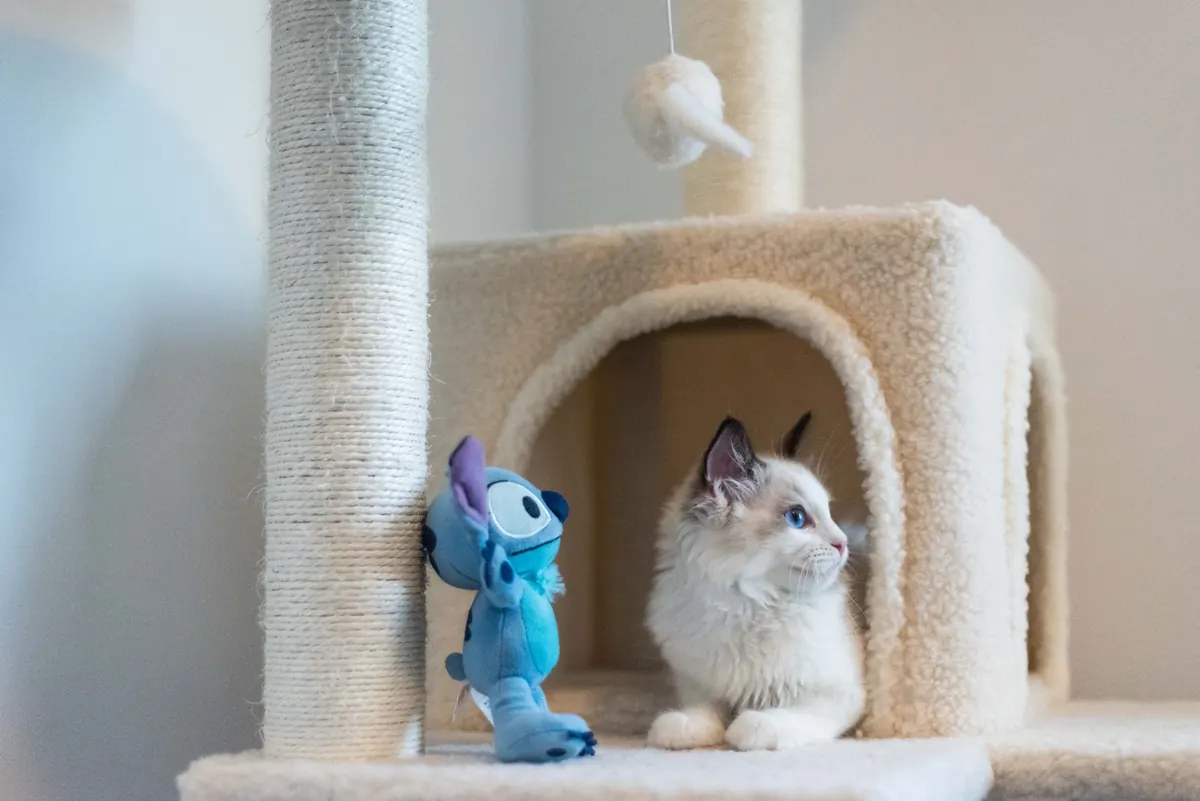
Photo: MuffinLand / Pexels